
La Tomatina Ham Pole | The Significance of the Palo Jabón
Why Do People Climb The La Tomatina Ham Pole?
Answer: It is part of ongoing tradition because it used to be the official starting pistol for La Tomatina. The rules were simple: when someone finally wrestled that ham off the top, water cannons would fire and thousands of tonnes of tomatoes would start flying.
Picture this: a massive greased pole standing tall in Buñol’s main square, a cured ham dangling temptingly at the top, and hundreds of festival-goers cheering on brave souls trying to shimmy their way up. It’s bonkers, brilliant, and completely Spanish.
The La Tomatina ham pole, or palo jabón if we’re being proper about it, is one of La Tomatina’s most photographed traditions. But here’s the thing that trips people up.
If you’ve been googling about this festival, you’ve probably read that the tomato fight starts when someone grabs that ham. Well, that used to be true.
These days? Not so much. Let me clear up the confusion and tell you what actually happens with this greasy spectacle.
What is the ham pole tradition?
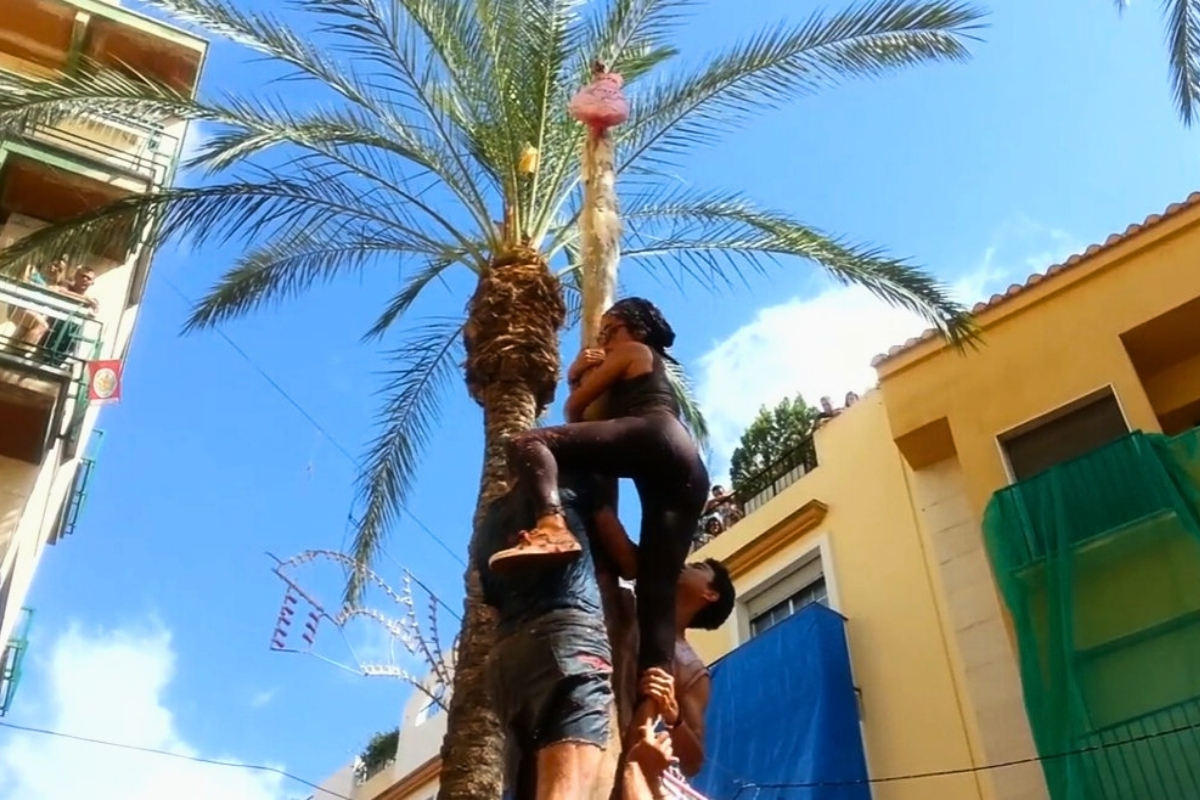
The palo jabón is exactly what it sounds like: a tall wooden pole absolutely slathered in grease, soap, or lard (depending on who’s doing the greasing that year), with a proper Spanish cured ham stuck on top like the world’s most ridiculous trophy.
Quick facts about the ham pole:
- What’s on top? A cured ham (jamón)
- What’s it called? The palo jabón (literally “soap pole” or “soap stick”)
- The goal? Climb the slippery pole and knock the ham off
- What makes it tricky? The pole is covered in grease or soap
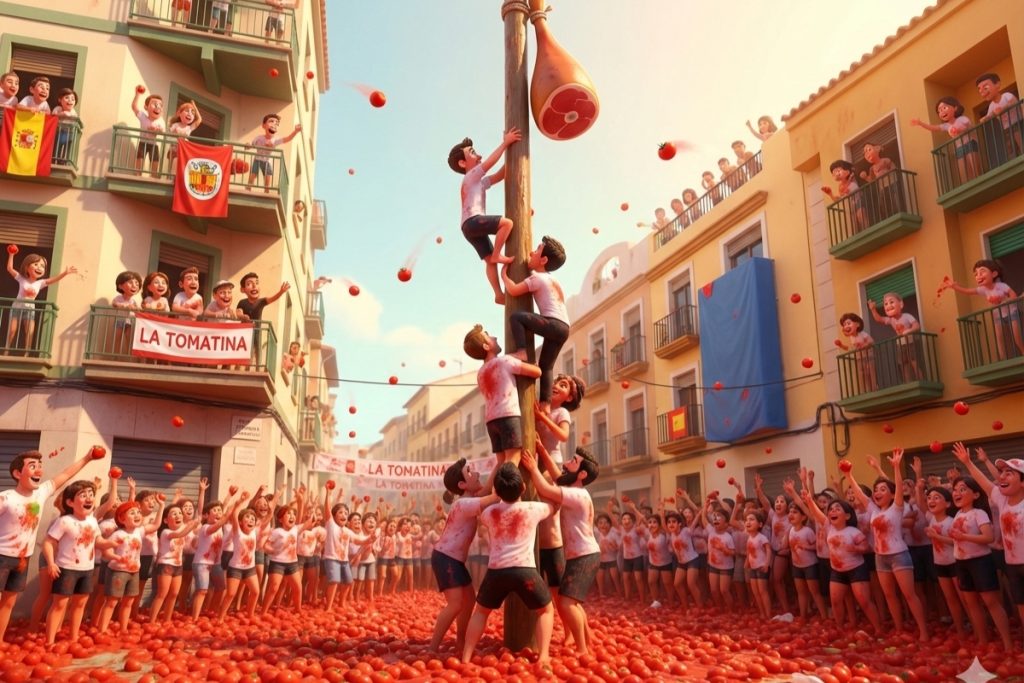
- How do people tackle it? Human pyramids, teamwork, desperately trying to wipe off the grease
- Does anyone actually succeed? Sometimes yes, sometimes no
It’s absolutely mad watching people attempt this. They form human towers, they slip and slide, they get knocked down by other competitors.
It’s like watching a very Mediterranean version of gladiator combat, except everyone’s laughing and nobody wins gracefully.
How the tradition has changed over the years
Originally, the ham pole wasn’t just entertainment.
It used to be that when the ham was claimed from the top of the pole, the town then detonated, the cannon fired, and a red deluge of tomatoes swallowed Buñol whole as trucks dumped their smooshy tomato contents into the streets.
Sounds brilliant in theory. In practice? Sometimes it took absolutely ages.
Imagine thousands of people standing in the August heat, getting more impatient by the minute, whilst a dozen blokes tried and failed to climb a greased pole. Eventually, the organisers realised this wasn’t sustainable.
People were getting restless. The anticipation was turning into frustration.
So they changed it. Now the tomato fight kicks off at midday whether anyone’s grabbed that ham or not.
The palo jabón still happens, but it’s become more of a sideshow than the main event’s starting signal.
Here’s the confusing bit though. Loads of websites and travel guides still say the ham pole starts the festival. Check out our website or PP Travel for the most updated information on when the tomato fight actually starts.
They haven’t updated their information. So when you rock up to La Tomatina expecting to wait for some hero to climb that pole, you might be surprised when the tomatoes start flying at noon regardless.
The official Buñol town council has the most current information if you want to double-check timings for your year.
Is the La Tomatina ham pole climb worth watching?
Absolutely, if you’re there early and want to soak up the pre-festival atmosphere.
The palo jabón attempt usually kicks off mid-morning, and it’s genuinely entertaining. The crowd gets behind it, there’s cheering and groaning with every slip and slide, and the whole thing captures that playful, ridiculous spirit that makes La Tomatina so special.
It’s also a cracking photo opportunity. How often do you get to watch people form human pyramids to reach a ham? That’s Instagram gold right there.
But here’s my honest take: don’t stress if you miss it. The ham pole is a fun bit of folklore and tradition, but the real magic of La Tomatina is the hour of absolute tomato-throwing chaos that follows.
That’s what you’ve travelled for. That’s what you’ll remember for years afterwards.
If you do want to watch the ham pole shenanigans, get yourself to the Plaza del Pueblo reasonably early. Find a decent viewing spot where you can see the pole but aren’t going to get trampled when the crowds surge forward.
Then just enjoy the spectacle and the building anticipation.
Because that’s what the ham pole really offers now. It’s not the starting signal anymore, but it’s part of the ritual.
It’s part of the slow build-up that makes La Tomatina feel like an event rather than just a tomato fight. It’s tradition, absurdity, and community spirit all wrapped up in one greasy package.
The Folklore Of The La Tomatina Ham Pole
So there you have it. The palo jabón is a quirky, slightly mad tradition that’s evolved over the years from essential festival starter to beloved sideshow.
Does it still matter? In its own way, yes.
It’s part of what makes La Tomatina feel uniquely Spanish, uniquely fun, and uniquely ridiculous. Whether anyone manages to grab that ham or not, the tradition lives on as a symbol of the festival’s playful spirit.
And honestly, in a festival where thousands of people throw tomatoes at each other for an hour, a greased pole with a ham on top fits right in.
Cracking good fun and sometimes extremely funny to watch!
The La Tomatina Ham Pole? FAQS
Does anyone still manage to get the ham down from the pole?
Yes, sometimes people do successfully grab the ham, though it’s far from guaranteed. The combination of grease, height, and competition from other climbers makes it incredibly difficult.
Why do people form human pyramids during the ham pole climb?
Human pyramids are the most effective strategy for conquering the greased pole because one person alone simply can’t get enough grip on the slippery surface. Getting that ham requires teamwork, trust, and a fair bit of courage. Though other competitors sometimes deliberately collapse these pyramids to improve their own chances, which adds to the chaotic entertainment.
What time does the tomato fight actually start at La Tomatina?
The tomato throwing officially begins at midday regardless of whether anyone has retrieved the ham from the greased pole. A cannon fire signals the start, and lorries loaded with tomatoes roll into the streets. The fight lasts for exactly one hour, ending when a second cannon fires at 1pm. Don’t rely on the ham pole as your starting signal because the festival runs on a strict schedule these days.
Hope to see you there next year for La Tomatina 2026!


