
La Tomatina Cleanup: Who Cleans Buñol After the Epic Chaos
Who Cleans Buñol’s Streets After The Tomato Fight?
Answer: The local fire brigade and council work in tandem with volunteers to quickly cleanup the streets of Buñol once the tomato fight has concluded.
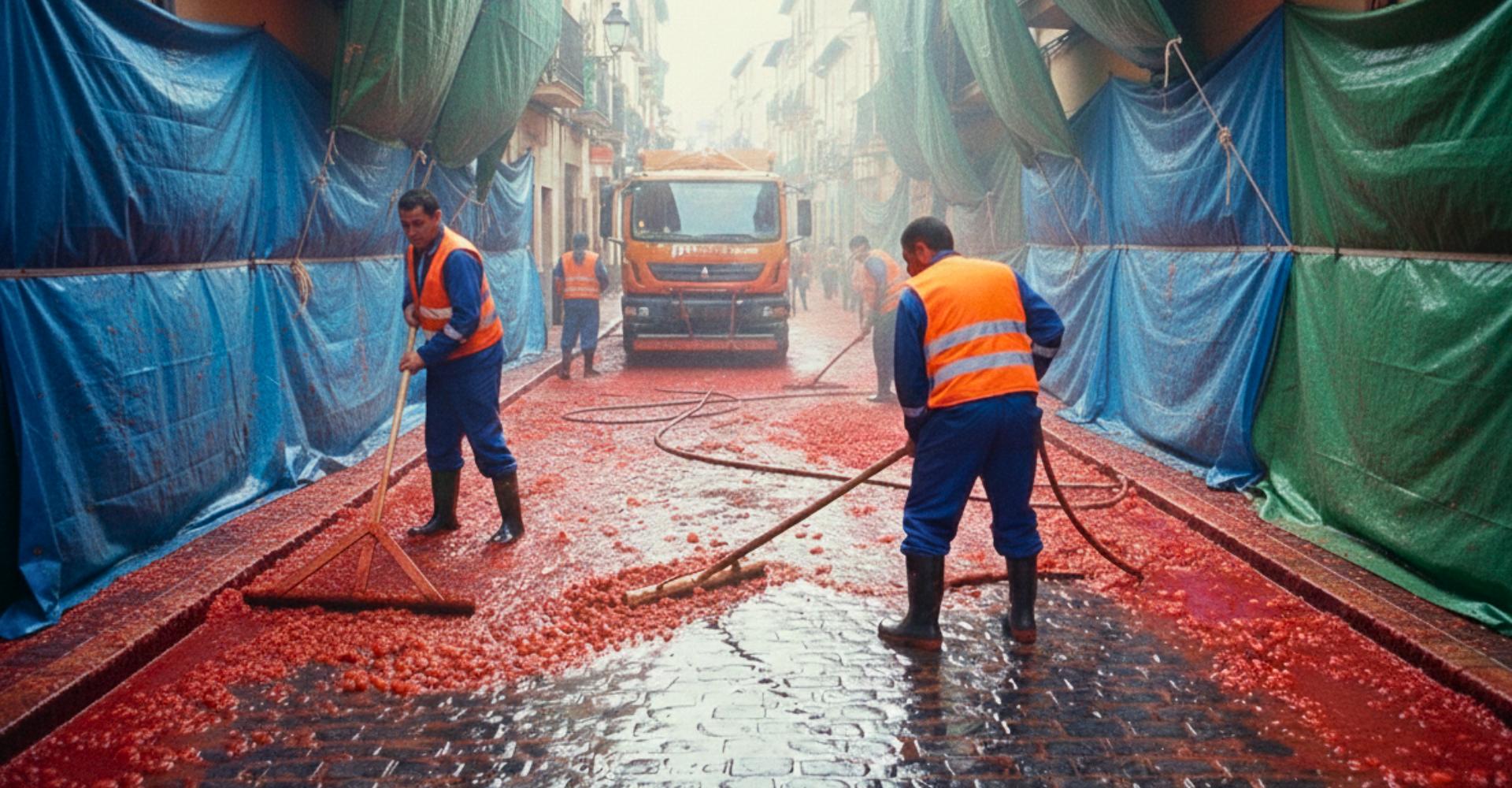
After all the tomato fight fun, the La Tomatina cleanup is actually really well organised. Dedicated cleaning crews team work very well together to get Buñol back to normal after 150 tonnes of tomatoes hit the streets
Trust me, Buñol doesn’t just wake up the next day magically clean. There’s a proper operation behind it, and honestly, watching the cleanup is nearly as fascinating as the festival itself.
The Scale of the Mess After La Tomatina
Let’s be clear about what we’re dealing with. When La Tomatina ends at 1pm, the streets aren’t just messy. They’re properly covered. Ankle-deep tomato pulp in places. The walls are splattered red. Shop shutters, windows, drains, cobblestones – nothing escapes.
The smell is strong too. Slightly sweet, quite acidic, and absolutely everywhere. You can taste it in the air.
There are always a few abandoned items left behind. Goggles, single shoes, the occasional ripped t-shirt. But mostly it’s just tomatoes. Mountains of them to tackle in the great La Tomatina Cleanup.
Who Cleans Up After La Tomatina?
The fire brigade sorts most of it. Soon as the last tomato gets thrown, fire trucks arrive with industrial hoses and just blast everything. High-pressure water, proper force behind it. They work systematically down each street, pushing all that red pulp downhill.
Buñol’s built on a slope, which helps massively. Gravity actually does half the job during the La Tomatina cleanup. The tomato river just flows straight down into the drainage system.
After the fire crews finish, the council’s street cleaning teams come through. They’ve got mechanical sweepers, shovels, brooms. They clear the drains, sweep up debris, make sure nothing’s blocking the town’s water flow. These workers have done this for years. They know exactly where the problem spots are.
Local residents help too. Most shop owners and homeowners come out with their own hoses and buckets to wash down their properties. It’s not forced or anything. It’s just what happens. The whole town’s involved in getting things back to normal.
How Long Does It Take to Clean Up La Tomatina Streets?
Main streets get cleared surprisingly fast. About two hours after the festival ends, you can walk through Plaza del Pueblo without squelching through tomato pulp.
Full cleanup takes longer. Side streets, building facades, the smaller alleyways – that goes on into the evening and sometimes the next morning. But by the following day, you’d struggle to find evidence that anything happened at all.
The speed comes from experience. Buñol’s been hosting La Tomatina since 1945 so they’ve had plenty of practice with the La Tomatina cleanup.
How Do They Clean the Streets in La Tomatina?
Fire hoses do the bulk of it. Those high-pressure blasts shift tomatoes that would take hours to sweep manually. The water comes from Buñol’s regular infrastructure – there’s enough capacity to handle the cleanup.
Street sweepers follow behind to pick up solid bits. Shoes, clothes, bits of cardboard, the occasional whole tomato that somehow survived. Then council workers focus on clearing drains and making sure water’s flowing properly.
Shop owners and residents pressure-wash their own buildings. By mid-afternoon, most of the main streets look almost normal again. There’s usually still a very faint pink tinge to everything, but the worst of it’s gone.
The whole process is efficient because everyone knows their role. Nobody’s standing around wondering what to do next.
Where Do People Wash Themselves at La Tomatina?
There are temporary showers set up near the train station and by the small river. Basic but functional. Expect queues.
N.B. In 2025 none of these were working and I could not get an answer from anyone as to why!
Plenty of locals also offer their garden hoses to festival-goers. You’ll see people lined up in side streets, taking turns rinsing off under someone’s outdoor tap. It’s surprisingly civilised given the circumstances.
Some people just head straight to the river. Others try get on their tour bus or train back to Valencia still covered in tomato bits but this is almost certainly NEVER permitted. You must be clean before trying to get back to your accommodation.
If you’re planning to go, bring a complete change of clothes and a plastic bag for your tomatoey outfit. Your accommodation will appreciate it.

What Happens to All the Tomato Waste?
Most of it goes straight into the drainage system and eventually reaches wastewater treatment facilities. Tomatoes are biodegradable, so they break down relatively quickly. The acidity means the water needs treating properly, but Buñol’s infrastructure handles it.
Some solid waste gets collected separately and composted. The tomatoes used for La Tomatina aren’t fit for eating anyway – they’re grown specifically for throwing, often overripe or misshapen ones that wouldn’t sell. So at least there’s no food waste in the traditional sense.
Could it be more environmentally friendly? Probably. But compared to most big festivals, the impact’s fairly low. Organisers have been making gradual improvements over the years too.
Do Tomatoes Really Make Buñol’s Streets Cleaner?
This is actually true and not at all an urban myth as some would have you believe. The acidity in tomatoes acts as a natural cleanser. Combined with the high-pressure hosing, the streets genuinely come out brighter than they were before the festival.
Locals will tell you Buñol looks its best right after La Tomatina. The whole town gets what’s essentially a deep clean. It’s an accidental benefit, but a real one.
Whether that justifies covering an entire town in tomatoes once a year is up for debate. But the cleaning effect is definitely noticeable.
Final Thoughts on the La Tomatina Cleanup
The cleanup operation at La Tomatina works because Buñol’s been doing it for decades. The fire brigade, council workers, and local residents have the whole thing down to a routine. Within hours, a town buried in 150 tonnes of tomatoes looks almost spotless.
If you get the chance to experience La Tomatina, consider sticking around after the fight ends. Watching the transformation happen in real-time is genuinely impressive. Just stay out of the way of the fire hoses.
As always PP Travel is our recommended Day Trip, Tickets and Tour Provider to La Tomatina!

La Tomatina Cleanup FAQS!
How long does it take to cleanup after La Tomatina?
Unbelievably the main streets are cleared in about two hours. Sometimes the full clean-up takes until evening or next morning. Buñol looks completely normal within 24 hours.
Do festival participants have to help with the cleanup?
No. The fire brigade and council workers handle it all. You just need to concentrate on cleaning yourself at the temporary showers or find some locals with hoses.
Is La Tomatina bad for the environment?
Not particularly. Tomatoes are biodegradable and go through wastewater treatment. The festival’s environmental impact is relatively small compared to most large events.
Hope to see you there next year for La Tomatina 2026!


